Most beginners stand up in their first session. That part tends to surprise people. What takes longer, sometimes much longer, is everything that follows: catching real waves on purpose, building balance under pressure, learning to read the ocean and currents before you even touch it. The honest answer to this question depends entirely on what you “count as learning”.
What “Learning to Surf” Actually Means
Before any timeline makes sense, you need a clear finish line. Most people conflate three very different milestones, and the answer changes completely depending on which one they are measuring:
- Standing up on a board in a controlled setting: most people manage this on day one.
- Riding whitewash consistently with reasonable balance and control: typically one week of regular practice.
- Catching and riding unbroken green waves with timing and intention: this is where real surfing begins, and it takes most people several weeks to a few months.
When someone says they “learned to surf” in a week, they usually mean the first milestone, maybe the second. The third is the one that actually counts.
The Learning Curve, Stage by Stage
Progression in surfing follows a recognizable arc, even if the pace varies. Here is what most beginners move through:
Sessions 1 to 3: Standing Up
Your first goal is simple: understand what the board does under your feet and execute a clean pop-up. Most beginners manage their first stand-up during session one. The wave does most of the work at this stage. You are riding whitewash, the slow, broken water at the end of a wave, where conditions are forgiving and repetitions come quickly. Expect to fall often. Expect to feel your shoulders by the end of the hour. By session three, most people can stand with some consistency when conditions cooperate.
Week 1 to 2: Riding Whitewash Consistently
Once you can stand up, the focus shifts to control. You stop being surprised by the board and start making deliberate choices: where to place your weight, how to center your stance, how to stay on the face of a wave instead of launching over the front. This phase is less dramatic than the first pop-up, but it is where the real foundation is built. Muscle memory develops here. Two weeks of daily sessions looks completely different from two weeks of once-a-week attempts.
Weeks 3 to 8: Catching Green Waves
This is the milestone that separates a beginner surfer from a complete beginner. Unbroken green waves move differently. They require timing, positioning, and a much sharper read of the ocean. Most coached beginners reach this stage within three to eight weeks of consistent practice. Without coaching, it often takes significantly longer, and it is easy to reinforce bad habits during this phase that will limit your progression for years.
Beyond Two Months: Reading Waves and Building Style
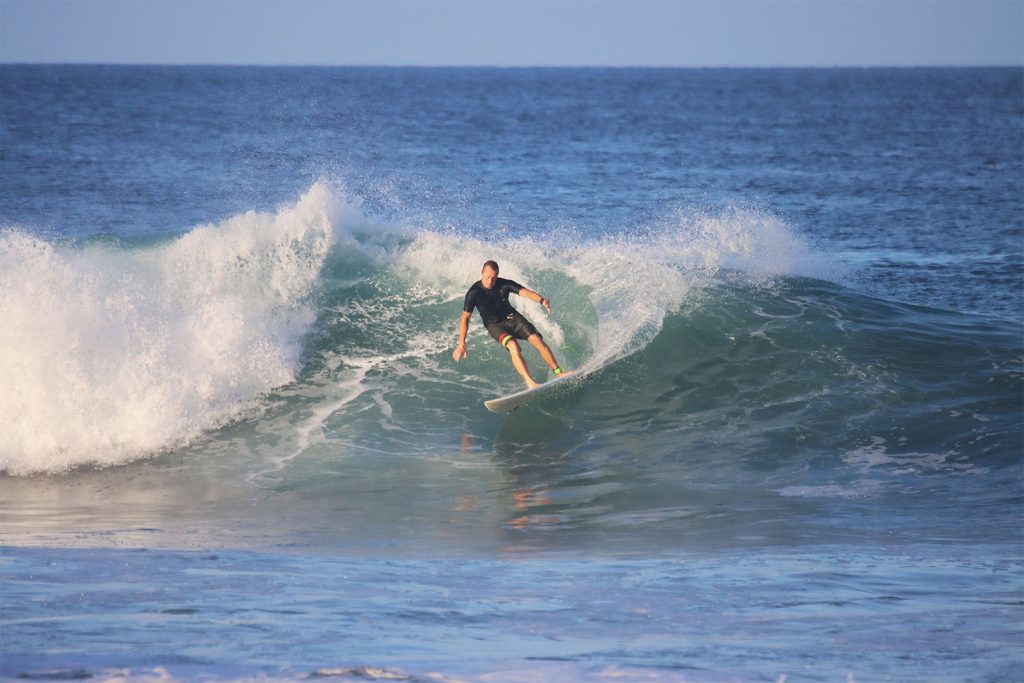
Once you are riding green waves, surfing opens up considerably. You start understanding where to sit in the lineup, how different swells behave, where to position on the face of a wave to generate speed or set up a turn. This phase has no clear finish line. Most surfers who progress regularly describe it as the most rewarding period: there is always something to refine, and each session starts to feel intentional.
The Factors That Decide How Fast You Progress
Progress in surfing is never determined by a single variable. These five factors shape almost every beginner’s timeline:
| Factor | What it changes |
| Physical condition | Paddling endurance and pop-up speed improve faster with a base level of fitness |
| Practice frequency | Daily sessions compound far more quickly than weekly ones |
| Equipment | A longer and wider board that provides stability removes obstacles so you can focus entirely on technique |
| Wave environment | Gentle, consistent waves allow more repetitions per session |
| Quality of coaching | The single most compressible variable on this list |
Of these five, coaching has the highest leverage. The other four set your ceiling. Coaching determines how quickly you reach it.
Why a Surf Coach Changes Your Timeline Completely
Most people who try to learn on their own spend months reinforcing bad habits. A crooked stance. A hesitant pop-up. Paddling at the wrong angle to the wave. Going to your knee first. These feel invisible to the person doing them, but they create a ceiling that is very hard to break through without an experienced eye watching from outside the water.
A qualified surf coach changes that dynamic entirely. They see what you cannot. They know which wave to send you on before you have even started paddling. They give you one specific correction per session instead of ten overwhelming notes. That specificity is what accelerates progress.
There is also something more subtle at work: a good coach manages your energy. They pull you out of the water before fatigue turns every rep into a reinforcement of bad movement. They structure the session so that the hardest work happens when your body and focus are still fresh.
Self-teaching is not impossible. But the gap between someone who had three weeks of coached sessions and someone who had three weeks alone in the water is visible to any experienced eye. The coached surfer moves with purpose. The self-taught surfer often moves with a lot of enthusiasm and a few deeply ingrained problems.
Does Age Affect How Quickly You Learn?
Yes, but far less than most people expect.
Children adapt physically faster. They are closer to the water, lighter on the board, and carry less hesitation into the ocean. That matters. Adults bring something different: they process feedback more directly, they understand their body mechanics, and they tend to be more strategic about practice when they decide to commit.
We have coached beginners ranging from eight to sixty-two years old at Popoyo. The most consistent predictor of progress was never age. It was showing up every day and applying corrections between sessions. Some adults progress faster than teenagers precisely because of that. They take notes seriously and they do not give up after a hard morning in the water.
If you are thirty-five and wondering whether it is too late to start surfing: it is not. There is no age at which the ocean closes the door on someone willing to put in the time.
Why Popoyo Is One of the Best Places to Learn
Most famous surf destinations are excellent for experienced surfers and genuinely difficult for beginners. The waves are powerful, the lineups are competitive, and a nervous beginner paddling out at the wrong break can have a rough time before the first session is even finished.
Popoyo, on Nicaragua’s South Pacific coast, works differently. Multiple breaks sit within a short distance of each other, ranging from slow, rolling beach breaks where beginners can work through the fundamentals to heavier reef waves where more advanced surfers take the bigger sets. You can move through different breaks at the same location without driving two hours every time your level changes.
The water is warm year-round. No wetsuit, no physical restriction, no added weight. Just you and the board. The swell is consistent: southern hemisphere storms send clean, well-organized waves along this coast for most of the year. And Nicaragua has not been overrun by surf tourism the way Bali or Costa Rica have. The lineups stay manageable. The pace of the whole experience stays human.
For a beginner, that combination is hard to find anywhere else in the Americas. A detailed breakdown of the breaks, the best seasons, and what to expect at each spot is available on the Nicaragua Surf Guide.
How We Structure Progression at Nicaragua Surf Camp
Every coaching approach here starts from the same question: what will actually make this person a better surfer in the time they have?
The answer is rarely more volume. It is more structured, more targeted time in the water.
Each day begins with a conditions briefing: which break we are going to, why, and what each person is working on that session. Groups are small by design. We stay close, give corrections in the water, and debrief on shore afterward. We film sessions regularly, so you can see exactly what is happening rather than what you think is happening. The difference between the two is almost always instructive.
If you arrive with zero experience, the first two days are deliberately unhurried. Pop-up mechanics, paddling posture, how to read a wave from the shore before you commit to paddling out. The foundation matters more than getting you into the water quickly. Most guests are catching waves by the end of week one that they did not think were possible on day one. By the end of two weeks, many are riding green waves and starting to make real decisions in the lineup.
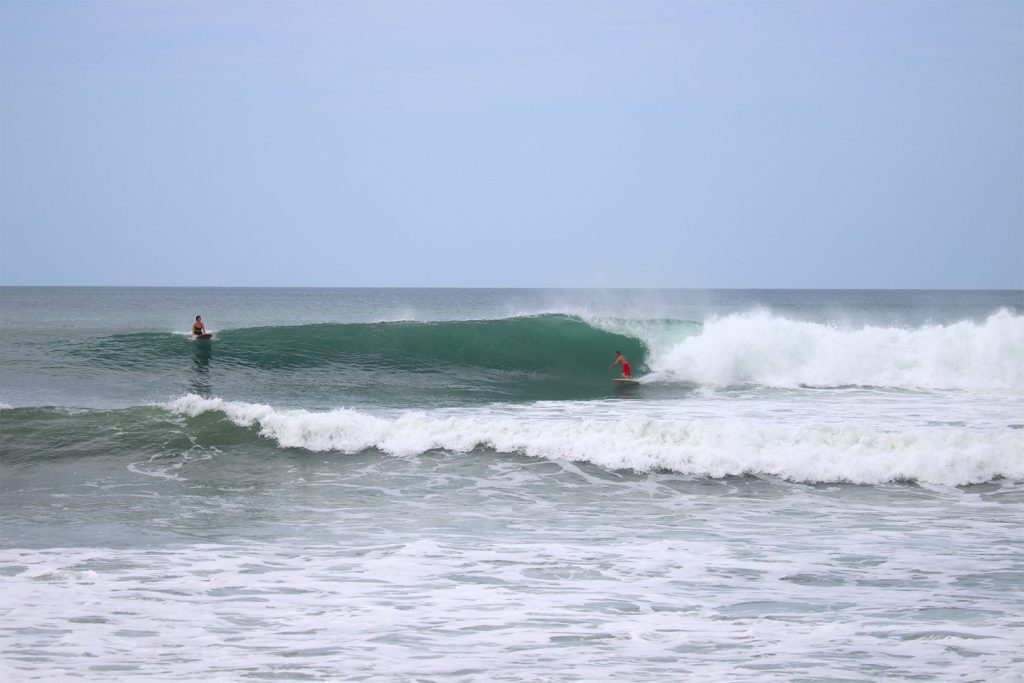
The Nicaragua Surf Camp coaching team has spent years in this water. That local knowledge shapes every session: which breaks work best for which stage of learning, where to avoid during certain swells, and how to read the conditions each morning before a board ever hits the water.
For a full overview of what each stay includes, the surf packages page covers everything from lesson structure to accommodation and meals.
Tips to Progress Faster as a Beginner Surfer
Wherever you learn, these habits consistently separate beginners who progress quickly from those who plateau early:
- Surf every day when possible. Four consecutive days builds more than four isolated weekends. Consistency compounds.
- Start on the right board. A soft-top between 8 and 9 feet removes obstacles that slow you down. Shortboards come later, much later.
- Warm up your shoulders and body before every session. Paddling fatigue degrades technique faster than anything else in the water.
- Film yourself. What you think you are doing and what you are actually doing are rarely the same.
- Watch the lineup before you paddle out. Observe where experienced surfers sit, when they paddle, and how they time incoming sets.
- Accept the whitewash phase. Rushing toward the outside break before your pop-up is automatic will slow your overall progression.
- One focus per session. Choose one thing: stance, pop-up timing, or weight distribution. Work only on that. Trying to fix everything at once fixes nothing.
Ready to Catch Your First Wave?
Learning to surf is one of those experiences that stays with you long after you’ve dried off. The progression is real, the feeling is addictive, and it all starts with that first ride. If you’re ready to make it happen, Nicaragua Surf Camp has the coaches, the waves, and the setup to get you there. Find out more at nicaraguasurfcamp.com.