
Popoyo’s greatest strength is not any single wave. It is the density of breaks across a compact stretch of Pacific coast that covers every skill level, from the gentlest sandy bay to one of the heaviest slabs in Central America. That range only works in your favor if you know which spot matches where you are right now, not where you want to be in six months.
Getting Oriented: What “Popoyo” Actually Covers
The word “Popoyo” describes a loose geographic area, not a single beach. Some of the best waves in the region require a motorbike, a boat transfer, or a timed walk at low tide to reach.
The Nicaragua Surf Guide covers the full geographic layout of this coast, including what each access route involves and how the swell patterns for the Rivas Department interact with the different exposures along the shore.
The Two Variables That Should Drive Every Break Decision
Before any break-by-break breakdown, two conditions change everything: swell size and tide stage. These are not background context. They are the actual decision.
Swell size determines which breaks are appropriate and which become dangerous. Main Reef at waist-to-chest height is a flowing, accessible wave that rewards positioning and timing. The same reef at double overhead tests experienced surfers and closes out viable options for everyone else. This pattern holds across every reef break in the area: the wave that fits your level at one size becomes a different proposition entirely when the swell doubles. Checking the forecast the night before is the first step, not an optional one.
Tide governs the safety margin at every rock-bottom break and the shape of every sand peak. At low tide, exposed reef sections demand a surfer with the experience to manage them. At mid to high tide, the same breaks become more forgiving, with the extra water depth providing room for error. Specific tide windows are noted for each break below. When a break is described as best at mid to high tide, surfing it at low tide is a choice with real consequences.
Both variables are knowable in advance. A surf forecast and a tide chart, checked the evening before, eliminate most of the guesswork about where to paddle out.
For Beginners: Two Breaks That Give You What You Need
Choosing the wrong break as a beginner does not just make for a hard session. It means fewer waves, higher anxiety, and slower progression. The three options below generate enough consistent repetition to let technique develop without asking the surfer to fight conditions they are not ready for.
Beginner Bay
Situated beneath the Magnific Rock hotel, Beginner Bay is the softest water in the immediate Popoyo area. Waves break gently and predictably, the paddle out is among the easiest on this stretch of coast, and the lineup rarely crowds. Mid to high tide is when it works best, with enough water depth over the rocky sections to keep the environment genuinely forgiving. The middle of the bay works on low tide and is a sand bottom option when swell and current is low.
It suits a first session, a day when another break is too much, or any morning when a surfer needs clean repetitions without complexity. Longboarders also gravitate here for similar reasons.
Gavilan
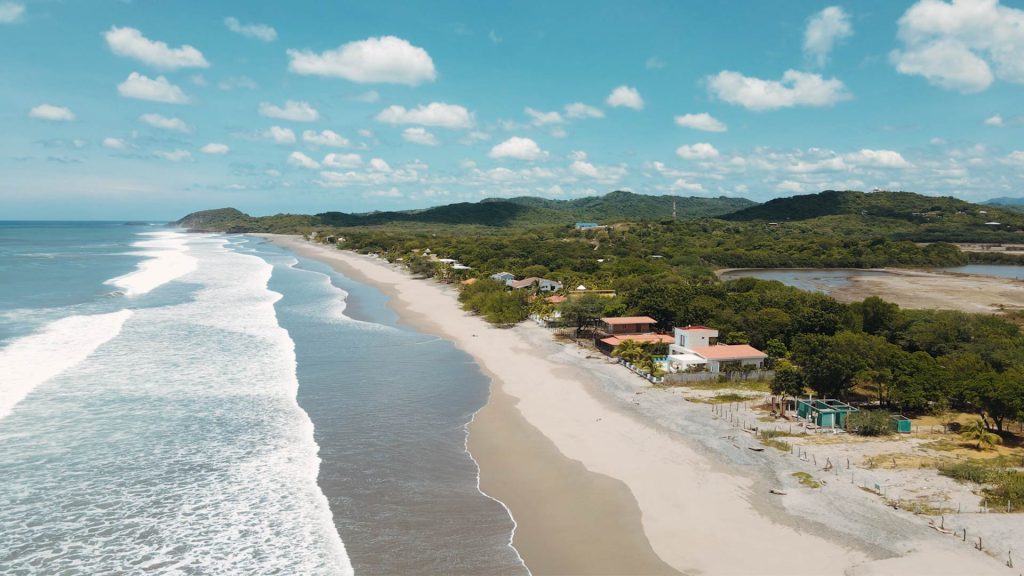
At small swell, the wave is genuinely beginner-friendly: manageable speed, forgiving shape, enough variety along the beach to stay interested. Once the swell builds past chest height, the wave accelerates and steepens into intermediate territory.
Best checked on small-swell mornings before defaulting elsewhere. When the size is right, the ride quality here surpasses what most beach breaks in the area can offer at that scale.
For Intermediates: Where Real Development Happens
Three distinct breaks serve intermediates at Popoyo, and they represent different phases rather than interchangeable options. The order in which they make sense depends on what the surfer can already do.
La Lejana
The least discussed break in the area and one of the most useful for the intermediate stage. A long left over a reef bottom, it runs softer and more predictably than Main Reef, with enough face to practice positioning, weight transfer, and drive without the commitment that Main Reef demands. It needs adequate swell to wake up on flat or very small days it disappears, but when conditions are running, it delivers consistently and rarely draws a crowd.
Mid to high tide, SW swell, NE offshore. For a surfer who has solid green wave riding but is not yet comfortable at a busy, hollow reef, La Lejana is the step between beach break confidence and reef break readiness.
Main Reef
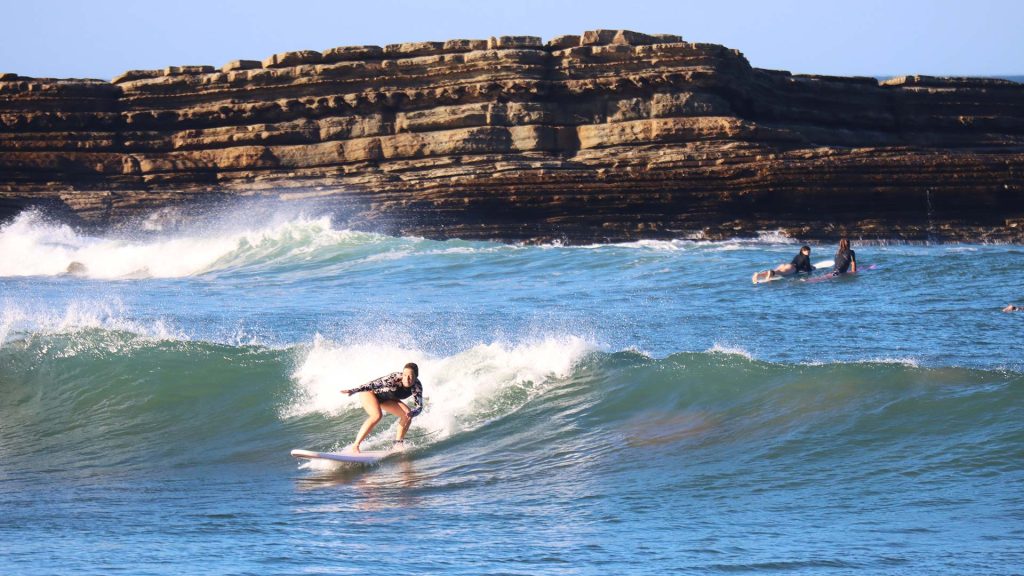
The A-frame that put this part of the Nicaraguan coast on the surfing map. Both a left and a right break off the peak over a well-covered reef ledge. At the right size : chest to overhead, it is hollow, moderately long, and produces the kind of wave that rewards reading the swell rather than simply reacting to it. It works across all tides (dangerous at low with rock exposure) and handles swell from most directions, which makes it the most reliably surfable reef in the immediate area.
The crowd reflects its consistency: the lineup here skews more experienced than anywhere else nearby. Intermediates who have clean green wave riding and are actively working toward their first real barrel will find what they are looking for. At low tide, the margin for error on the reef narrows considerably worth keeping in mind before paddling out on a falling tide.
For Advanced Surfers: The Breaks That Require Respect
Each of these waves carries specific requirements : physical, technical, and logistical, that need to be understood before paddling out. None of them are for surfers who are almost ready.
Lances Left
Getting there is the first part: a five-minute boat ride from El Astillero, or a walk timed to reach the river crossing before the tide makes it impassable. On the right day, the effort is repaid in rides up to 500 meters, a long, walling left over a rock reef that delivers the kind of sustained surfing rarely available at beach breaks.
Low to mid tide preferred, Mid to high on large swell. The bottom is rock with sea urchins, which demands experience managing falls in a reef environment rather than learning that skill on arrival. SW swell with NE offshore produces the best shape. Boat trips run regularly from the camp when conditions are right.
Note: This spot is also beginner friendly on small swell
Playa Colorado
Forty minutes south by motorbike, Colorado is a hollow beach break that throws right and left barrels over a sand bottom among the best opportunities to get barreled at a beach break anywhere in Central America. Mid to high tide, south to southwest swell, NE offshore. The sand bottom means stingrays are present on entry and exit: shuffle rather than step to push them away rather than land on them.
No longer a secret. The lineup has grown in recent years. Still worth the ride on the right swell.
The Outer Reef
Not much qualifying is needed here. The Outer Reef is one of the heaviest waves on this coast: an ultra-hollow left-hand slab that breaks over extremely shallow rock with speed and very little forgiveness on the take-off. It requires large southwest swell, typically twelve feet or more on the face, to break at all, which means it functions only a handful of times in a given year. When it does, it belongs to a short list of surfers with the experience, paddle fitness, and judgment the situation demands.
Worth watching from the shore regardless of level. Paddling out is a different decision entirely.
How to Read the Morning and Choose Your Spot
A four-point check before any session removes most of the guesswork:
1. Swell size and direction. Check the night before. Anything under chest height points toward Guasacate, Beginner Bay, or Santana. Chest to overhead brings Main Reef and La Lejana into play. Above overhead during the swell season, Lances Left, and Colorado become the priority calls.
2. Wind direction and strength. NE offshore is what most breaks here want. Light offshore conditions at sunrise tend to hold through the morning before afternoon trades pick up. If wind is already onshore at first light, breaks with natural shelter hold their shape better than fully exposed peaks.
3. Tide timing. Know when low tide falls and plan the session window accordingly. Reef breaks want water over them. Beach breaks tolerate the full tide cycle more easily, though most peak up clearest at mid tide. A tide chart takes thirty seconds to check and changes which spots are sensible.
4. Your own condition. A tired surfer at a demanding break catches fewer waves and gets less from the session than a rested surfer at a marginally easier one. Matching the break to actual energy level on a given morning is not a concession. It is how a week of surfing stays productive rather than grinding.
At Nicaragua Surf Camp, this check is part of the morning briefing before every session. The coaching team makes that call daily, based on fifteen years of knowing how this coast behaves.
The Progression Path Through Popoyo’s Breaks
What makes this area genuinely unusual is that the breaks connect into a logical development arc rather than sitting as independent options with no relationship to each other.
A surfer who arrives as a complete beginner starts at Beginner Bay or Gavilan. As consistency builds. La Lejana then provides a first real experience of a reef left with enough length to start making decisions mid-ride. Main Reef follows, where beach break habits either hold up or get exposed by the hollow, faster-moving face. Playgrounds and Colorado are rewards for a surfer who has done the work. The Outer Reef occupies its own category.
No other stretch of coast this compact offers that complete a ladder from entry level to expert. A focused two-week stay here can produce more measurable development than a month spent at a single-break destination precisely because each step up is available within the same base. The surf packages at Nicaragua Surf Camp are structured around this arc: which break on which day, and why, is built into how each coaching week is planned.