The destination shapes the experience as much as the lessons do. A beginner on the right wave, in an uncrowded lineup, with qualified coaching available, makes more progress in a week than someone spending a month fighting the wrong conditions. Choosing where to surf is not a secondary decision. It is where the whole trip begins.
This guide covers six of the most consistently recommended beginner surf destinations worldwide, with an honest read on each. And one destination that almost every list overlooks entirely.
What Separates a Good Beginner Spot from a Great One
Most travel guides use the label “beginner-friendly” loosely: soft waves, warm water, a surf school nearby. Those factors matter, but they are not the whole picture. Here is what actually determines how well a destination works for someone learning to surf:
Wave consistency. Sporadic swell means sporadic sessions. A destination with reliable, predictable waves allows daily practice, which is the single greatest driver of early progression. One week of daily surfing in consistent conditions is worth considerably more than a month of sessions interrupted by flat spells or chaotic, unreadable swell.
Water temperature. Surfing without a wetsuit is physically easier. No added weight on the shoulders, no restriction around the chest and arms, no heat management during a pop-up. Warm water also reduces hesitation in the lineup, which matters more for beginners than most people realize before they experience both.
Crowd levels. Overcrowded lineups directly limit beginner progression. Fewer waves per session, higher baseline anxiety, more risk of collision, and harder for instructors to keep a clear view of each student. A calm, manageable break is not just more comfortable. It is more productive.
Quality of available coaching. A surf school that sends twenty people into the water with one instructor is not the same as a structured coaching environment with small groups, individual feedback, and regular video analysis. Both exist under the same label.
Progression range. The best beginner destinations have multiple breaks at different difficulty levels within reach. Beginners start somewhere accessible and, as their technique develops, move to more demanding surf without changing base. A single break with no natural next step limits how far a learner can go in one trip.
Six Destinations Worth Putting on Your List
These six destinations appear consistently in beginner surf guides for real reasons. Each is assessed honestly here, including what the standard travel article tends to leave out.
Peniche, Portugal
Peniche is one of Europe’s most developed surf destinations, and that is both its strength and its limitation. The sheltered bay at Baleal offers genuinely beginner-friendly beach breaks that stay manageable when the Atlantic swell is too powerful for exposed spots. Infrastructure is strong: schools are plentiful, equipment rental is straightforward, and the town has built its identity entirely around the sport.
The honest caveats: Portugal has become extremely popular, and Peniche draws significant numbers throughout the summer months. Water temperature rarely exceeds 18 degrees Celsius (64.4°F) even at peak, which means a wetsuit is part of every session regardless of the season. For European surfers, it remains one of the most accessible options. For anyone traveling from further afield specifically to learn to surf, the cold water and crowd levels relative to alternatives are worth considering before booking.
Best for: European beginners who want proximity, variety, and established infrastructure. Best season: May to September for milder conditions.
Taghazout, Morocco
Taghazout has become one of the most popular surf destinations in Africa over the past decade, particularly for European surfers seeking warmth without a long-haul flight. Hash Point and several nearby beach breaks provide options across ability levels, costs remain low relative to Europe, and the cultural atmosphere of the town adds genuine character to a surf trip.
The honest caveat: Taghazout’s popularity has grown substantially. Summer brings flat conditions alongside peak tourist numbers. The most consistent swell arrives in the cooler months of autumn and early spring, which is also when the water temperature drops more than the destination’s warm reputation tends to suggest. Timing matters here more than at most destinations.
Best for: European beginners traveling in autumn or spring. Best season: October to April for reliable swell.
Weligama, Sri Lanka
Weligama sits on a sheltered bay on Sri Lanka’s southern coast and produces some of the most reliably gentle waves available for absolute beginners anywhere in Asia. The break is slow and consistent over a sandy bottom, which gives beginners enough time to execute a pop-up without being rushed by a fast-moving face. Surf schools are well-established, water is warm year-round, and the pace of the town suits learners who need patience and repetition without pressure.
The honest caveat: Weligama’s waves are excellent for the initial phase, but the progression ceiling at the main spot is relatively low. Surfers who move through whitewash quickly may find themselves wanting more variety than the immediate area offers without traveling further along the coast.
Best for: Complete beginners seeking a gentle, low-pressure introduction. Best season: November to April.
Santa Teresa, Costa Rica
Santa Teresa has earned its place on beginner lists: consistent beach breaks, warm water year-round, and a range of spots from soft to more powerful. The town has built a full ecosystem around surf tourism, with camps, schools, yoga studios, and the kind of lifestyle infrastructure that makes the logistical side of a surf trip almost frictionless to organize.
The honest caveat: Santa Teresa is no longer a hidden destination by any measure. Prices have risen significantly over the past several years, the lineup during peak season is crowded by Central American standards, and the volume of visitors changes the atmosphere considerably from what it offered a decade ago. It remains a solid choice, but a well-discovered one. Budget-conscious travelers and those seeking an uncrowded learning environment should factor that in.
Best for: Beginners who want full lifestyle infrastructure and are comfortable with a busier destination. Best season: December to April for consistent swell and dry conditions.
Waikiki, Hawaii
Waikiki is where the modern idea of learning to surf was essentially born. The long, slow-rolling waves at Canoes and Queens break predictably over a sandy bottom, giving beginners the time and forgiveness they need to find their feet. Warm Pacific water, beachside board rentals, and instructors available along the waterfront make the logistics of a first session straightforward.
The honest caveat: Waikiki is among the most expensive surf destinations in the world on any measure, and the beginner lineups at the main breaks are reliably crowded. The experience is genuine, but the cost-to-value comparison against other warm-water beginner destinations is hard to justify unless Hawaii is already the destination for other reasons.
Best for: Travelers already visiting Hawaii who want an organized, reliable first surf experience. Best season: Year-round, with summer producing smaller and more manageable waves for beginners.
Byron Bay, Australia
Byron Bay built its reputation on real credentials: consistent beach breaks, warm water through most of the year, and a surf culture that feels lived-in rather than manufactured. The Point produces long, forgiving walls that are excellent for learning to ride down the line, and the town has genuine energy that many surfers find hard to replicate elsewhere.
The honest caveat: Byron Bay is very well known, and the crowd it draws reflects that. The lineup at popular breaks is often crowded, and the town itself has changed substantially over the past decade. For Australian and New Zealand beginners, it remains a natural first choice. For international travelers making a long-haul journey specifically to learn surf, the value proposition is less clear when comparable or better conditions exist at less-traveled destinations closer to home.
Best for: Australian and New Zealand beginners; travelers already in the region. Best season: March to September for the most consistent swell.
Popoyo, Nicaragua: The Best Choice Most Beginners Have Never Considered
Most beginner surf guides do not include Nicaragua. This is not because it lacks quality. It is because the destinations on those lists tend to follow one another, and Popoyo has not yet been overrun by the wave of surf tourism that has transformed places like Santa Teresa or Taghazout into something closer to surf resorts than surf destinations.
That will change. For now, what exists at Popoyo is something increasingly rare in surf travel: a destination with genuine world-class credentials that still functions at a human scale.
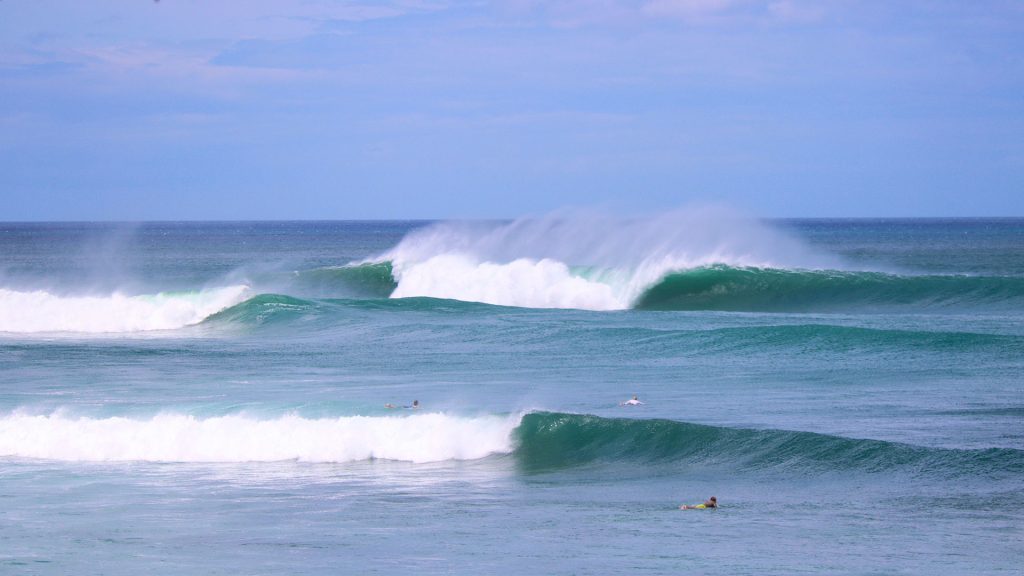
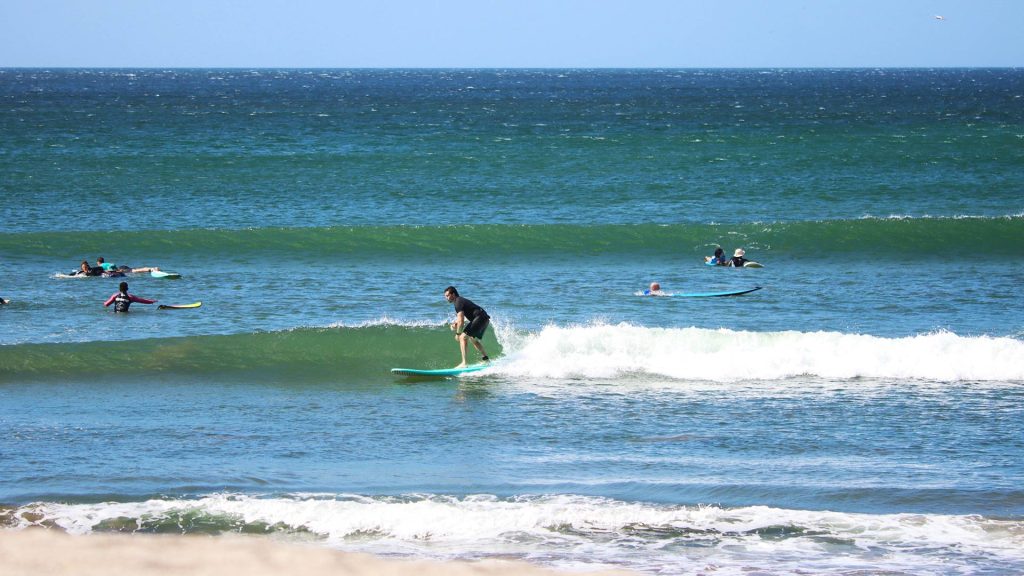
The Pacific swell arrives here in clean, consistent sets for most of the year, generated by southern hemisphere storms that organize the waves before they reach the coast. The result is reliable surf, predictable in timing and shape, which is exactly what a beginner needs to build repetitions and muscle memory across a week of daily sessions. Water temperature stays warm year-round. No wetsuit, no restriction of movement in the shoulders and chest, more direct physical feedback from the board. For someone working on a pop-up or learning to read a wave face, that freedom of movement is a practical advantage.
What makes Popoyo particularly effective for beginner to advanced progression is the range of breaks within a short distance of each other. Gentler beach breaks in the immediate area offer the forgiving, accessible conditions beginners need in their first sessions. Further along the coast, faster and more powerful waves provide a natural next step for surfers ready to push their range. A learner can arrive at Popoyo with no experience and follow a real progression arc across two weeks without ever needing to change base. That continuity is one of the most undervalued features of a good beginner destination.
The lineups are uncrowded by any meaningful comparison to the destinations listed above. On most sessions, you share the water with a handful of other surfers. This is not a minor lifestyle detail. It translates directly into more waves per session, less anxiety in the lineup, and more space for a coach to watch, correct, and adjust the focus of each session without interference from the surrounding crowd.
Nicaragua Surf Camp sits at Beginners Bay in Popoyo, and the coaching structure here is built around individual progression rather than group instruction at scale. Sessions are small by design. Each surfer is watched closely, corrected specifically, and filmed regularly so they can see their own technique from the outside rather than guessing at it. The consistency of the conditions means there is rarely a session that gets passed on, and the range of breaks means the day’s surf can always be matched to what each person is actually ready for. A full breakdown of how each week is structured is on the surf packages page.
For the beginner who wants to use their trip to actually get better rather than just spend time near the ocean, Popoyo removes most of the obstacles that slow progression elsewhere: crowded lineups, inconsistent swell, the logistical friction of moving between spots, and the absence of structured coaching in a manageable environment. A detailed guide to the breaks, seasons, and what conditions look like across the year is available on the Nicaragua Surf Guide.
Why Crowd Levels Matter More Than Most Guides Admit
The word “uncrowded” appears in almost every beginner surf destination guide. It is treated as a lifestyle preference, like a quieter restaurant. In practice, it is a progression variable.
A beginner in an overcrowded lineup catches fewer waves per session. That is the obvious part. The less obvious part is what happens to their focus: they spend energy managing their position relative to other surfers instead of concentrating on their own movement and timing. The anxiety baseline rises. The nervous system, which needs to be relatively calm to execute a movement that takes one to two seconds and cannot be consciously managed in real time, operates under more stress than it should.
Instructors work better with fewer students in the water. When a coach can watch one surfer take off at a time, identify the exact moment the pop-up or ride breaks down, and give one specific correction before the next wave arrives, the feedback loop is tight and effective. In a crowded session, that precision disappears. The instructor is managing logistics rather than coaching technique.
The most popular beginner destinations in the world have, in many cases, become victims of their own reputation. The waves have not changed. The capacity for quality learning has. Choosing a destination that still offers manageable lineups is not settling for less. It is choosing an environment where the actual mechanics of improvement can function properly.

How to Choose the Right Destination for Your Goals
Three questions cut through most of the noise when comparing beginner surf destinations:
What is the primary goal of the trip?
If the goal is a holiday that includes surfing, the destination’s overall atmosphere and non-surf activities matter as much as the wave.
If the goal is genuine, measurable progression in the water, then lineup conditions, coaching quality, and swell consistency should drive the decision.
How much time do you have?
A long weekend favors a nearby, logistically simple destination where the setup time is minimal.
Two weeks or more justify traveling further to find better conditions, smaller lineups, and a more structured coaching environment.
The benefits compound across multiple daily sessions in a way that a few scattered hours cannot replicate.
How comfortable are you going off the beaten path?
The classic beginner destinations are easy to plan because the infrastructure around surf tourism is fully developed and well-documented.
Less-traveled destinations like Popoyo require slightly more research and a longer flight from most of North America and Europe, but they deliver something the classic destinations have largely lost: the space, consistency, and focused learning environment that actually produce surfers rather than tourists who happened to stand on a board once.
The coaching team at Nicaragua Surf Camp is available to answer specific questions about what conditions at Popoyo look like for beginners at different starting levels, and what a realistic week of progression looks like from the first session onward.
Contact us if you’d like to book your next surf trip in nicaragua.