Nicaragua has a wider range than most people give it credit for. Active volcanoes, colonial cities, crater lakes, a Caribbean coast, and one of the most consistent surf stretches in Central America all exist within a country you can cross in a few hours. The challenge is not finding things to do. It is knowing which ones are worth the time.
On the Pacific Coast
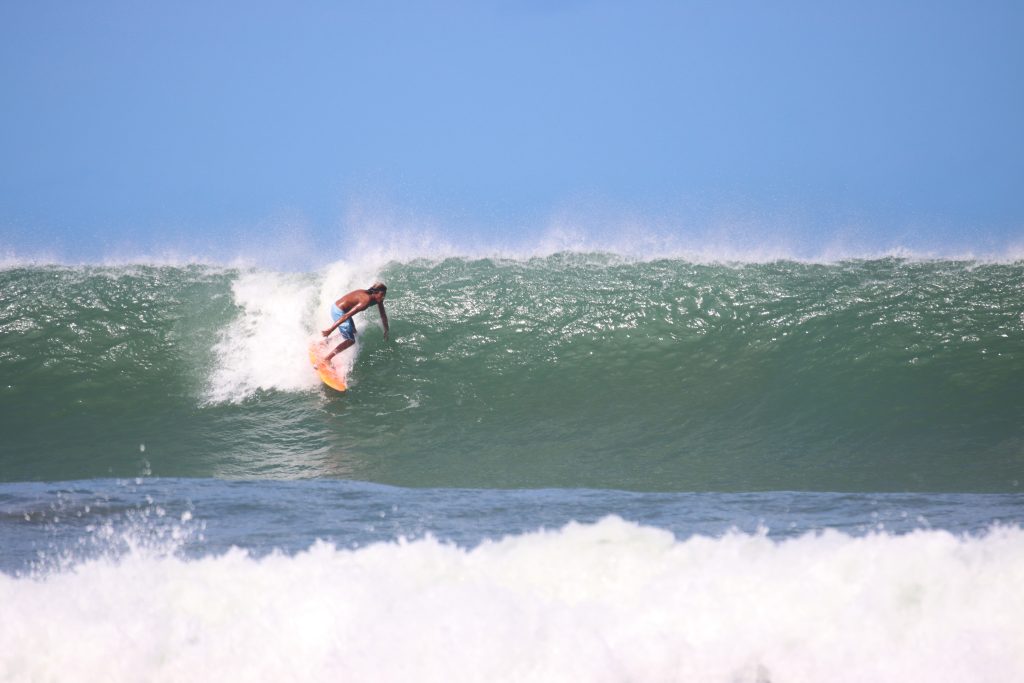
Nicaragua’s Pacific coast holds some of the most consistent surf in Central America. The offshore winds that shape the waves blow cleanly for around 300 days a year, which is why this stretch of coastline draws serious surfers from across the world.
Popoyo, in the Tola region, is the most developed of the dedicated surf destinations. It hosts a variety of reef breaks that works across a wide range of swells, A-frame beach breaks for all levels, and very little crowd pressure compared to what you would find at equivalent spots in Costa Rica or Indonesia. San Juan del Sur is more accessible and more social, with a beach town party atmosphere and beginner-friendly waves. Playa Gigante and the beaches north of Popoyo offer emptier lineups for surfers who want space. For a detailed breakdown of the breaks, conditions, and what to expect at each spot, the Nicaragua Surf Guide covers the full picture.
Volcano Boarding at Cerro Negro
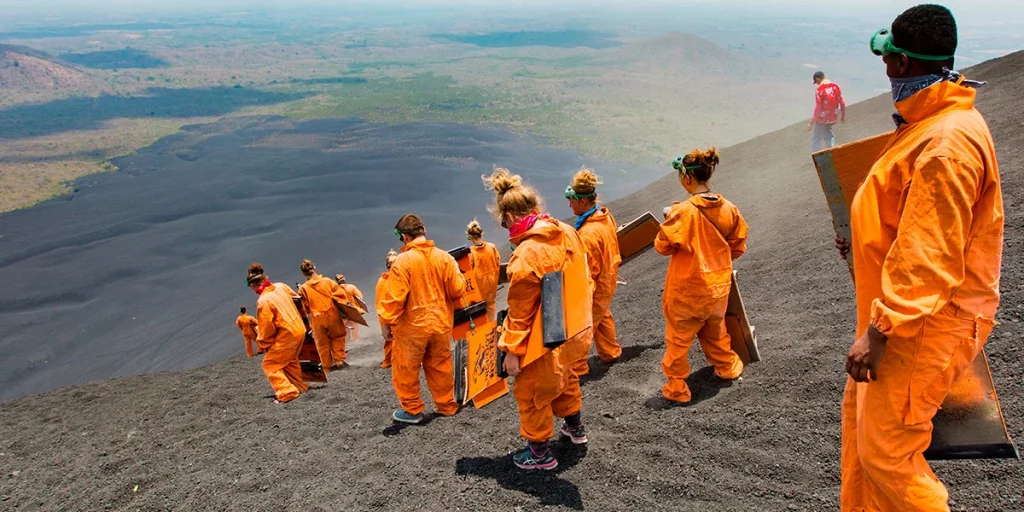
Cerro Negro is the youngest and most active volcano in Central America, a short drive from León. The ascent takes around 45 minutes over loose black volcanic rock. The descent is the point: riding down on a plywood board, in a jumpsuit, and on a slope steep enough to reach 50 to 80 kilometers per hour.
It is the one activity in Nicaragua that is genuinely hard to replicate anywhere else. An active, smoking crater above you and a long open descent below. Go in the morning before the heat builds and before afternoon tour groups arrive.
Masaya: The Volcano You Drive In To
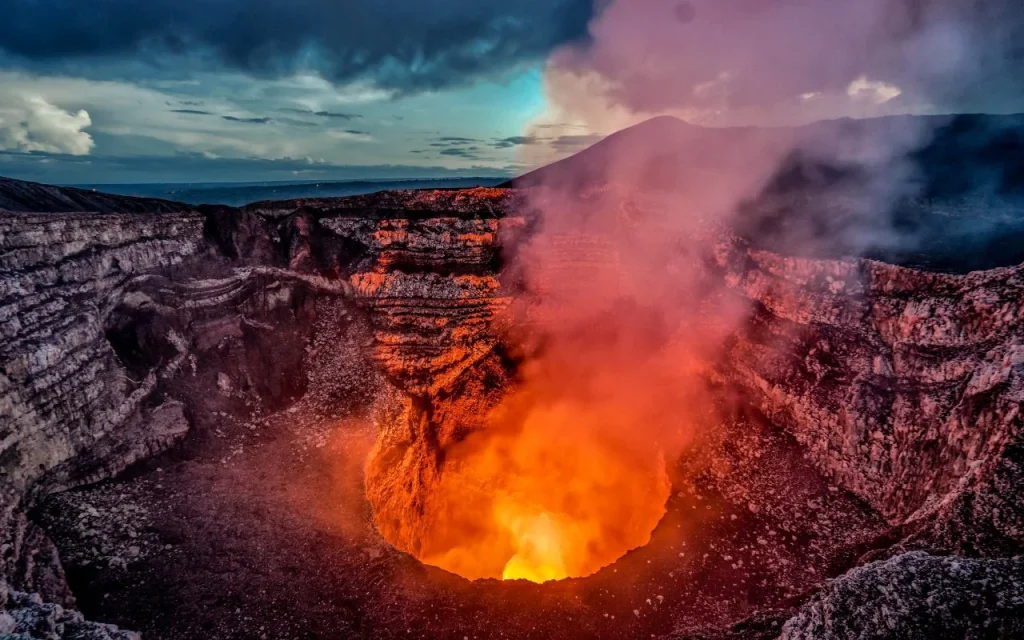
Masaya is different from every other volcano experience in Nicaragua. There is no long hike. The road takes you directly to the crater rim, where you look down into an active lava lake.
The night tour is the version worth doing. The glow from the lava is visible from the rim, and the atmosphere is unlike anything else in the country. Masaya sits roughly an hour from Granada and ninety minutes from Managua, which makes it a viable add-on to almost any itinerary without requiring a dedicated trip.
Granada
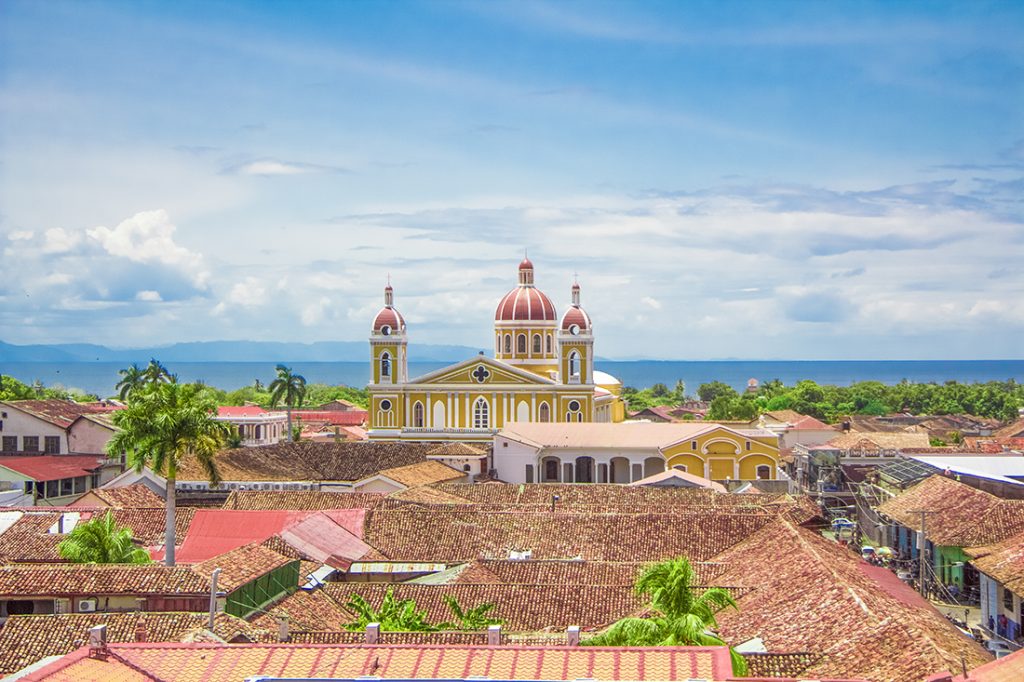
Granada is the most intact colonial city in Central America. The cathedral, the central park, and the network of old streets are all walkable. A horse-drawn carriage covers the historic center in an hour. And lake tours between the isletas created by a volcanic explosions thousands of years ago. The city has many options for beautiful culture and history.
Two things that earn extra time beyond the standard city visit:
- Las Isletas: A boat trip from the Granada waterfront takes you through 365 small volcanic islands in Lake Nicaragua, some inhabited, some empty. An hour on the water gives you a completely different view of the country.
- Laguna de Apoyo: A crater lake 30 minutes outside Granada. Deep, clear, and quiet. The water is warm, the setting is dramatic, and the crowds are manageable if you arrive early.
Ometepe Island
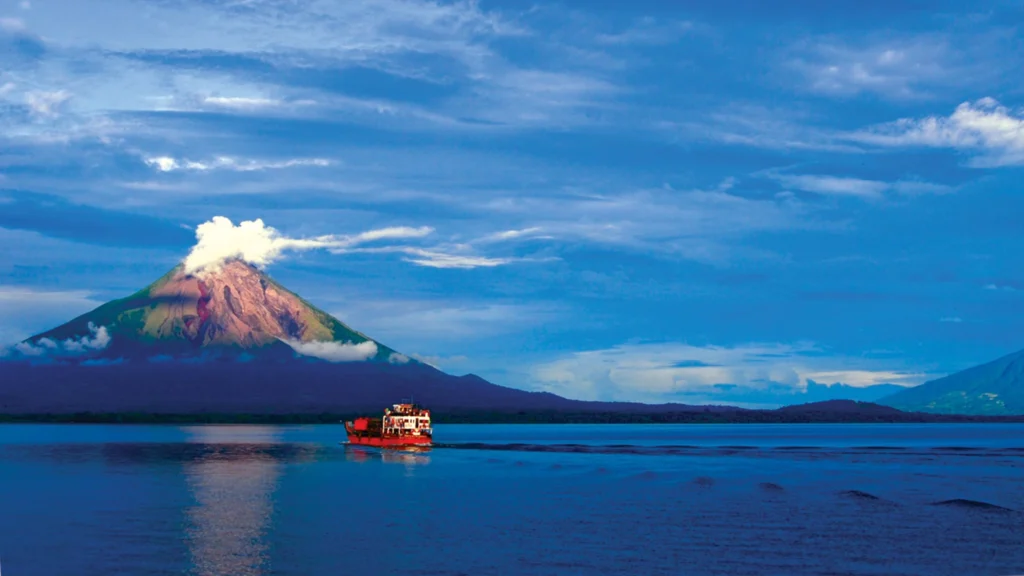
Ometepe is a twin-volcano island rising out of Lake Nicaragua, connected by a narrow peninsula and visible from the mainland. It is one of the more striking landscapes in Central America and one of the places in Nicaragua that justifies real time rather than a rushed visit.
The island takes at least one night to do properly. Hiking Concepción, the active volcano, is a full-day commitment. Motorbike rental is the right way to explore the secondary roads and reach the smaller beaches on the far side. The freshwater swimming spots, particularly Ojo de Agua, are worth the extra effort. Access is via ferry from San Jorge, near Rivas, with a crossing time of around an hour.
León
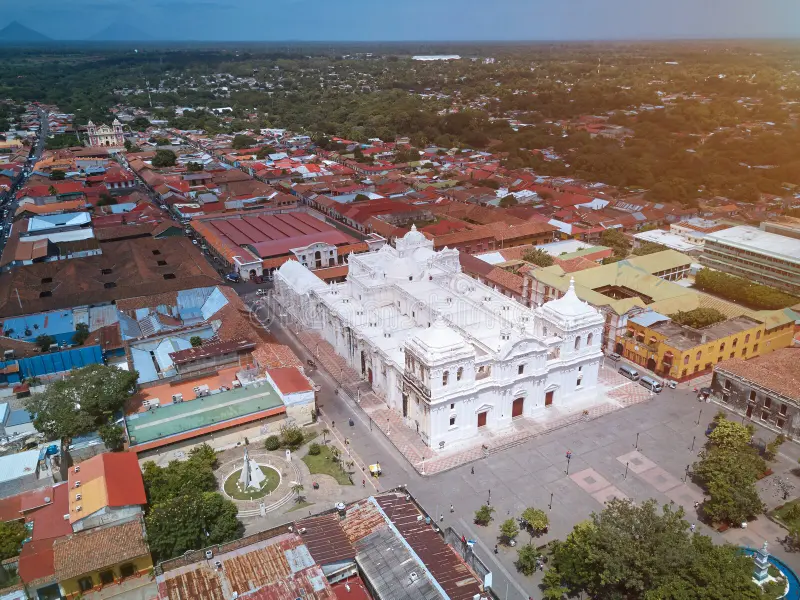
León reads differently from Granada. Where Granada has been polished for tourism, León still carries its history more visibly. The Cathedral of León is the largest in Central America. The climb to the roof gives you an open view across the city and the chain of volcanoes stretching toward the Pacific.
The city’s connection to the Sandinista revolution is present throughout: murals, museums, and a political culture that has not been smoothed over for visitors. The National Museum of the Revolution, housed in the former headquarters of the Somoza-era National Guard, is a serious and worthwhile piece of living history.
León pairs naturally with Cerro Negro. The two combined make the most logical overnight trip from the Pacific coast.
Along the Pacific Coast: Beyond the Breaks
The coast has more to offer than surf. A few things worth building into a trip based in Popoyo:
- Olive ridley turtle nesting: Between July and December, mass nesting arrivals known as arribadas bring thousands of turtles to beaches near Popoyo and La Flor. These events are unpredictable in timing, but when they happen, nothing else in Nicaragua comes close as a natural spectacle. The olive ridley is one of the smallest sea turtles and one of the most numerous, yet witnessing an arribada up close remains a rare experience.
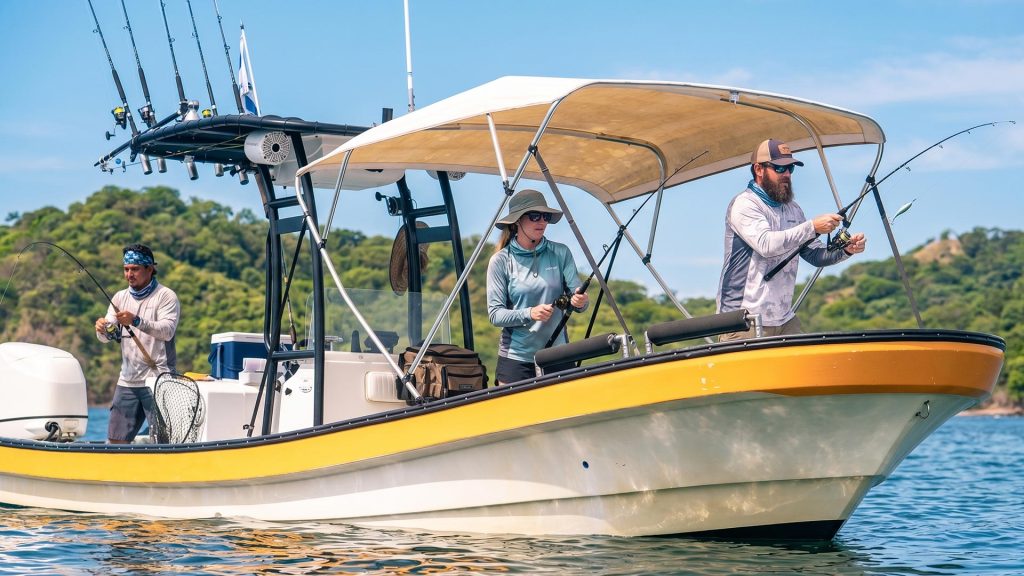
- Sport fishing: Offshore from Popoyo, the fishing for marlin, sailfish, wahoo, and mahi-mahi is serious. Half-day and full-day charters run with local crews who know the water.
- Boat trips: Several beaches along this stretch are only accessible by water. A boat trip is the only way to reach them, and the coastline from the water looks nothing like it does from the road.
- Horse riding, yoga, and wellness: The combination of physical surf sessions and a structured recovery practice is harder to find than it should be. The activities available at the camp cover most of what you would want without having to arrange everything independently.
How to Structure a Nicaragua Trip
Nicaragua is not as large as it looks on a map, and most of the country’s main experiences sit within a few hours of the Pacific coast. Combining a surf base with side trips is more feasible than most people expect.
| From Popoyo | Destination | Drive time | Worth an overnight? |
| Popoyo | Granada | 1.5 hours | Yes, 1 night minimum |
| Popoyo | Masaya volcano | 2 hours | No, day trip viable |
| Popoyo | León + Cerro Negro | 3 hours | Yes, 1 to 2 nights |
| Popoyo | Ometepe (via Rivas ferry) | 45 min + 1 hr ferry | Yes, 1 to 2 nights |
| Popoyo | Laguna de Apoyo | 2 hours | No, day trip viable |
A surf trip based in Popoyo can absorb two or three side trips within a seven-day stay without losing meaningful time in the water. The natural approach is to front-load or back-load the exploration: the first two days or the final two days of a trip are the practical windows. But always have a look at the swell forecast to choose the best time not to miss waves.
Start on the Coast
Popoyo puts you within range of the country’s main highlights while keeping you at the center of its best surf. If you are planning a trip and want to understand what a week here looks like, browse the available packages and get in touch. Most questions about combining surf and exploration are easier to answer with specific dates in hand.