

Popoyo is a year-round break – here’s what that actually means
Popoyo works every month of the year. That part is true. But “works” covers a lot of ground: a glassy two-foot reef on a January morning and a double-overhead south swell in July are both Popoyo, and they are not the same experience.
The question isn’t whether there are waves. The question is what kind of waves, and whether those waves match what you’re actually looking for. The answer depends on when you go and where you are surfing.
This guide breaks it down season by season, with a month-by-month reference at the end if you want to look up your specific travel window.
The two seasons and what drives them
Nicaragua has a dry season and a rainy season. The dry season runs roughly from November to April. The rainy season, also called the green season, runs from May to October. Those two windows produce very different surf.
What makes Popoyo exceptional is the Lake Nicaragua effect. The lake sits just inland, and the geography funnels offshore winds toward the coast for most of the year. That is where the “300 days of offshore winds” figure comes from. It is not marketing. On most mornings at Popoyo, whatever swell is running, the wind is offshore.
Swell direction shifts between the two seasons. The dry season brings smaller northwest swells. The rainy season brings south and southwest groundswells generated deep in the Southern Hemisphere, which light up Popoyo’s reef setups far more powerfully. You can get a detailed breakdown of each break and what conditions it needs in the Popoyo surf guide.
The swell season – May to October
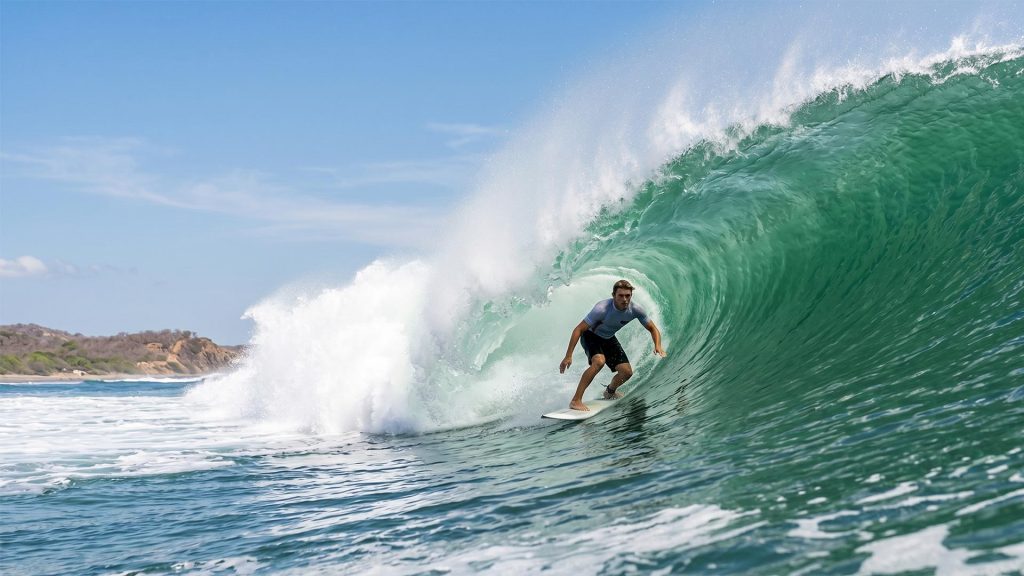
This is when Popoyo is at its most powerful. South swells start building in April, and by June the reef is firing consistently. July and August tend to be the most reliable months for size: head-high to double-overhead is standard, and bigger sets push through on stronger pulses.
The waves are hollow. Main Reef throws proper barrels on a good south swell. Outer Reef becomes an entirely different animal, pushing into heavy slab territory that is strictly for experienced surfers who know what they’re handling.
What to expect at the water
- Swell: South/southwest groundswell, most consistent June-September
- Size: Head-high to double-overhead on regular days, bigger during strong pulses
- Wind: Offshore in the morning, may pick up in the afternoon during peak season
- Water temperature: 27-28°C, no wetsuit needed
- Rain: Short, intense bursts, usually in the afternoon or evening. Mornings are often clear. Sessions are rarely ruined by rain.
September and October see more tropical activity. Swells stay consistent but weather windows can be tighter. October in particular is a true transition month: some days are outstanding, others are messy. There are fewer people in the water during both months than at any other point in the year.
Who it’s for
The swell season is built for surfers who are comfortable on overhead waves and want to put serious time in powerful surf. If your goal is to work on barrel positioning, read bigger sets, or push your surfing in conditions that demand precision, May to September is your window.
It is not the right season for beginners or early intermediates. The reef does not forgive inconsistent positioning, and the swell size leaves little room for error.
The dry season – November to April
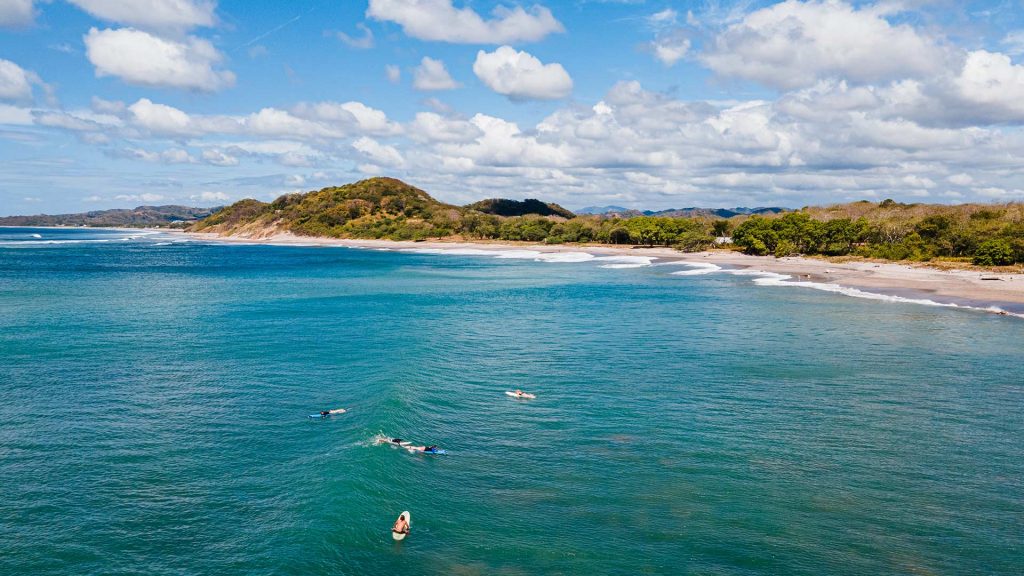
The dry season brings smaller, cleaner waves and exceptional wind. This is when Popoyo is most visually perfect: glassy mornings, organized lines, the offshore wind holding the lip open. Swells are less powerful, typically waist-to-head-high on average days, with occasional overhead sets when a northwest pulse combines with residual southern energy.
Main Reef still works well. The wave shape is cleaner and more forgiving than in summer. Beginner Bay has proper learner-friendly conditions.
What to expect at the water
- Swell: Northwest swells dominant, smaller and more spaced; occasional south/southwest residual
- Size: Waist-to-chest on quieter days, head-high on better days, overhead on the best days
- Wind: Strong offshore, especially January and February. Mornings are the priority.
- Water temperature: 24-26°C, slightly cooler than summer. A light spring suit or thicker 2-3mm rash guard is occasionally useful in Jan-Feb.
- Rain: Minimal. Blue skies most of the day.
Who it’s for
The dry season suits a wide range of surfers. Beginners get real waves in a manageable environment. Intermediates can focus on technique without being thrown into survival mode. Advanced surfers who want to work on surfing precisely, rather than just surviving big days, often prefer this window too.
Semana Santa (Holy Week, late March to early April) is the busiest period of the year in Nicaragua. Popoyo sees more local and regional traffic during that week. Outside of Semana Santa, the dry season is generally less crowded than people expect.
Month-by-month quick reference
Check the live surf report if you want a current read on what Popoyo is doing before you travel.
| Month | Swell size | Conditions | Best for |
| November | Waist to head-high | Clean, offshore | All levels |
| December | Waist to head-high | Consistent, clean | All levels |
| January | Waist to chest | Strong offshore winds, glassy mornings | Intermediate / advanced |
| February | Waist to chest | Similar to January, quietest crowds | Intermediate / advanced |
| March | Chest to head-high | Improving, south swell building | All levels |
| April | Head-high to overhead | Transitioning, crowd spike at Semana Santa | Intermediate / advanced |
| May | Head-high to overhead | Swell season begins | Intermediate / advanced |
| June | Overhead, consistent | Peak season underway | Advanced |
| July | Overhead to double overhead | Most consistent month | Advanced |
| August | Overhead to double overhead | Strong and powerful | Advanced |
| September | Head-high to double overhead | Consistent, fewer people | Advanced |
| October | Variable | Transition month, can be excellent | Advanced, flexible travelers |
One thing most guides don’t mention
Almost every piece of writing about Popoyo mentions offshore winds. What rarely gets explained is that the wind timing shifts depending on the season.
In the dry season, the offshore winds are strong and persistent. They can be almost too strong by mid-morning, making the surface choppy in the afternoon. The priority window is early. Get in the water at first light or by 7am. By 10am the wind is working against you on a lot of days.
In the swell season, the pattern is different. Mornings are often lighter and glassier. The wind builds more gradually and, on many days, stays manageable through midday. Some of the best barrels at Main Reef happen between 8am and 12pm in July.
Knowing this doesn’t just improve your sessions. It changes how you plan your days entirely.
Choosing your season based on your surfing level
Beginner: November to March. Manageable swell, forgiving conditions at Beginner Bay, and enough consistency to build real momentum over a week or two.
Intermediate: November to May. The dry season lets you work on specific skills without being overwhelmed. March and April add size and power as your confidence grows. September and October offer solid surf with almost no one in the water.
Advanced: May to September, particularly June to August. This is the window for Popoyo at full power. If your goal is barrel time on a quality reef, that is your season.
Browse the surf holiday packages to see what each season looks like as a structured trip. If you want to talk through which window fits your level and goals, we’re easy to reach and will give you a straight answer.