
Why Rip Currents Are Easy to Miss
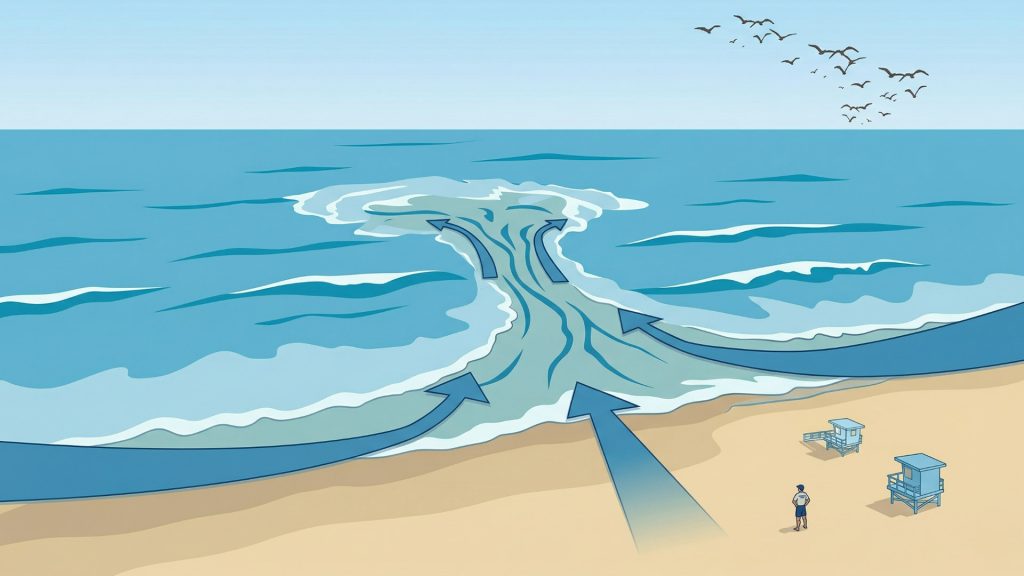
Most people expect dangerous water to look violent. A rip current often does not. It can appear as a calmer patch of water between breaking waves, which makes it easy to mistake for a safer place to enter.
That is one reason rip currents catch so many people off guard. The roughest part of the beach is not always the most dangerous part. Many people look at wave size first, but a rip current is about water moving away from shore, not just surface appearance.
On holiday, this becomes even easier to misread. Many swimmers are relaxed, distracted, or unfamiliar with ocean conditions. Someone may feel comfortable in the water and still choose the wrong place to enter because they do not know what to look for.
Why holiday conditions make poor decisions more likely
Heat affects judgment. Long time in the sun, dehydration, and fatigue can reduce attention before someone even gets in the water.
Alcohol makes that worse. It slows reactions and weakens decision-making. At the beach, small mistakes become more serious when people are tired, overheated, or not thinking clearly.
The 5 Common Signs of a Rip Current
Rip currents are not always obvious. In many cases, they look less dramatic than the waves around them. That is why it helps to stop and watch the water for a few minutes before going in.
You are not looking for one perfect sign. You are looking for a combination of clues that suggest water is moving back out through the surf. If two or three of these signs appear in the same spot, be cautious.
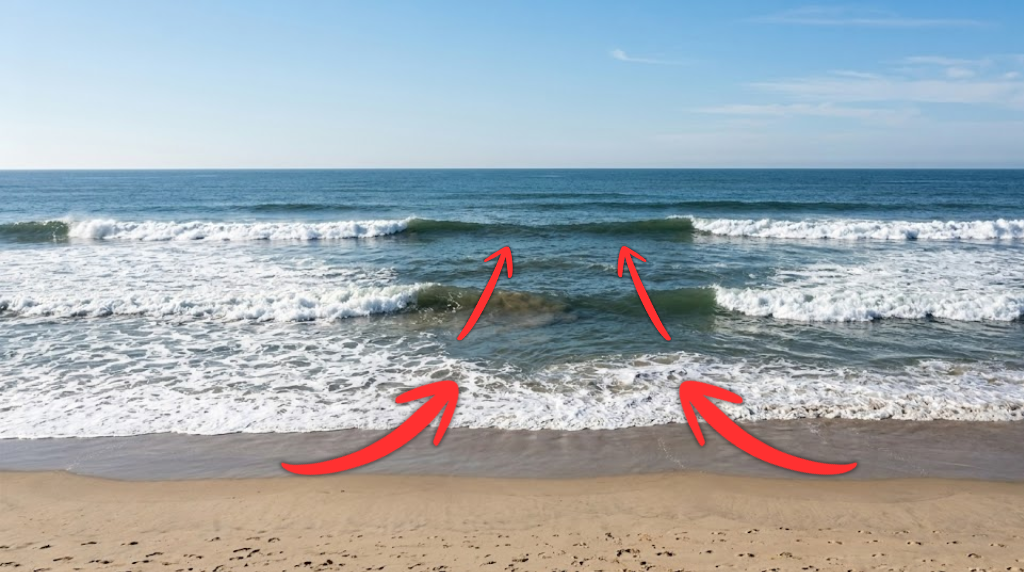
A gap in the line of breaking waves
Waves may be breaking consistently on both sides, with a gap in the middle where the water looks more open. That gap can mark the channel where water is flowing back offshore.
Darker or discolored water
A rip current zone can look darker than the water around it. It may also look brownish or cloudy if sand is being stirred up and carried out.
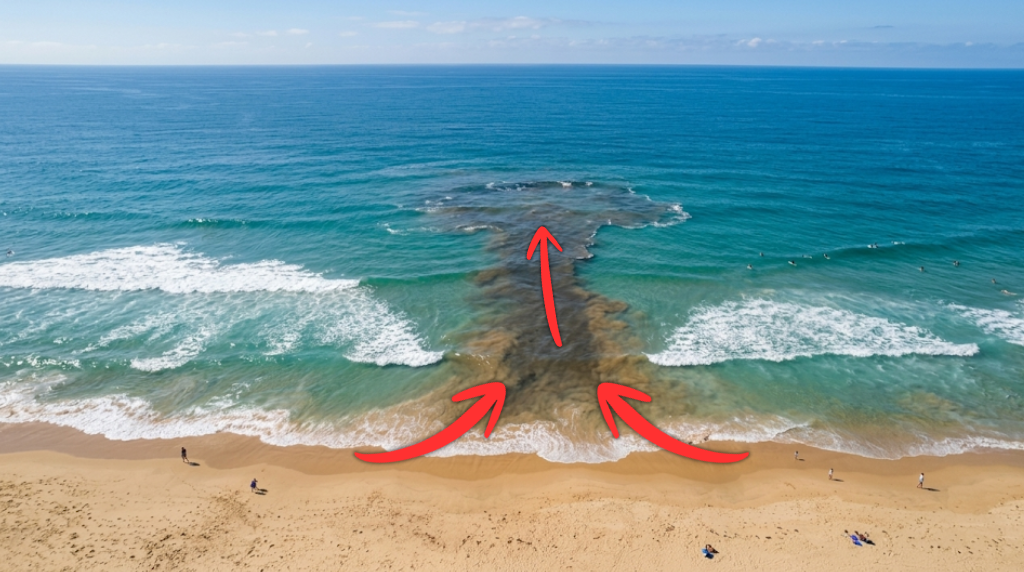
Choppy or unsettled surface texture
The surface may look irregular, bumpy, or restless compared with the surrounding water. Even without heavy breaking waves, the texture can show that the water is moving differently.
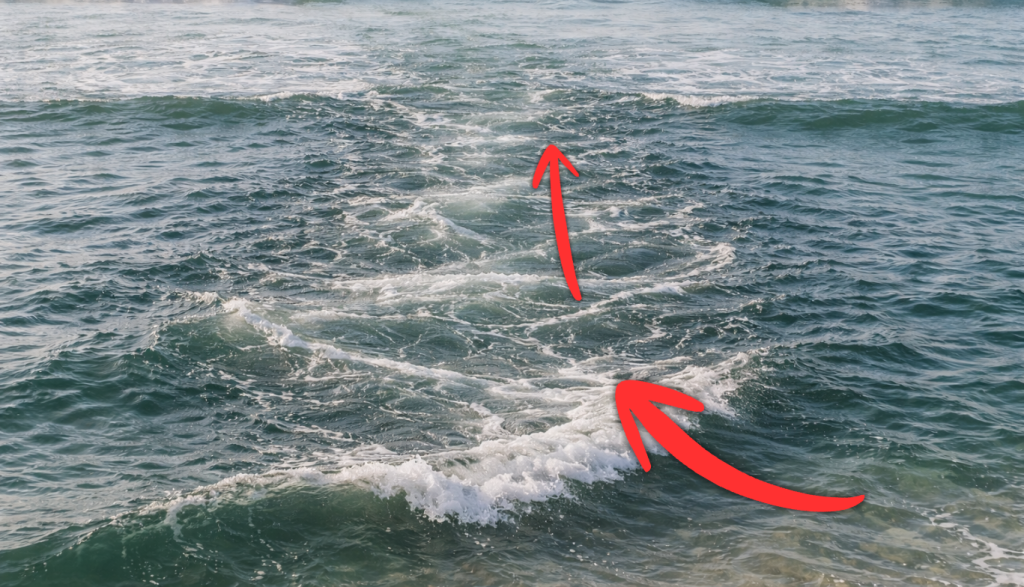
Foam, seaweed, or debris moving offshore
Watch what is floating on the surface. If foam, bubbles, seaweed, or small debris keeps moving away from shore in the same narrow area, that is a warning sign.
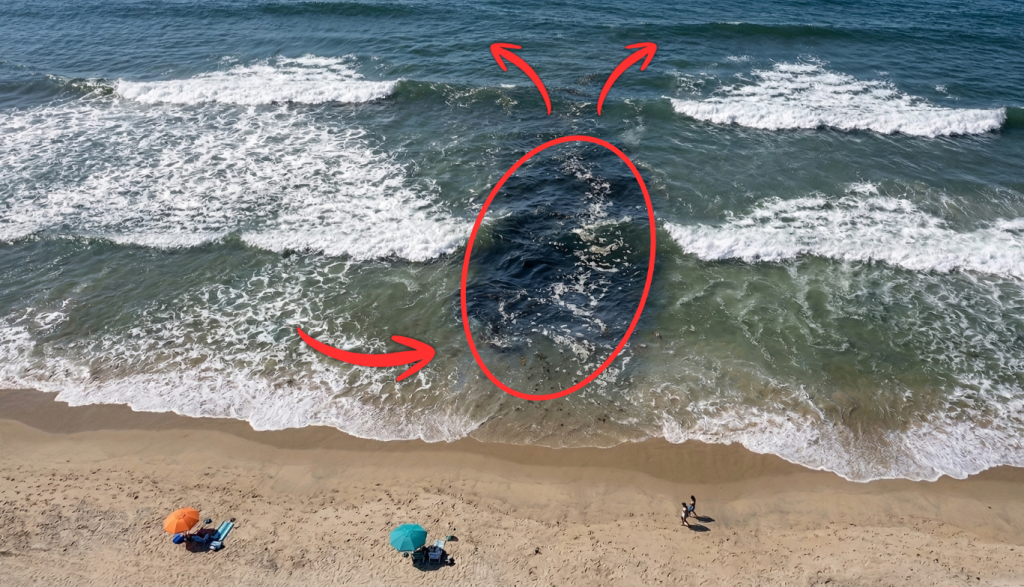
A calm-looking patch beside rougher surf
This is the sign that fools many people. Water that looks flatter or easier can actually be the place where water is escaping back out between the breaking waves.
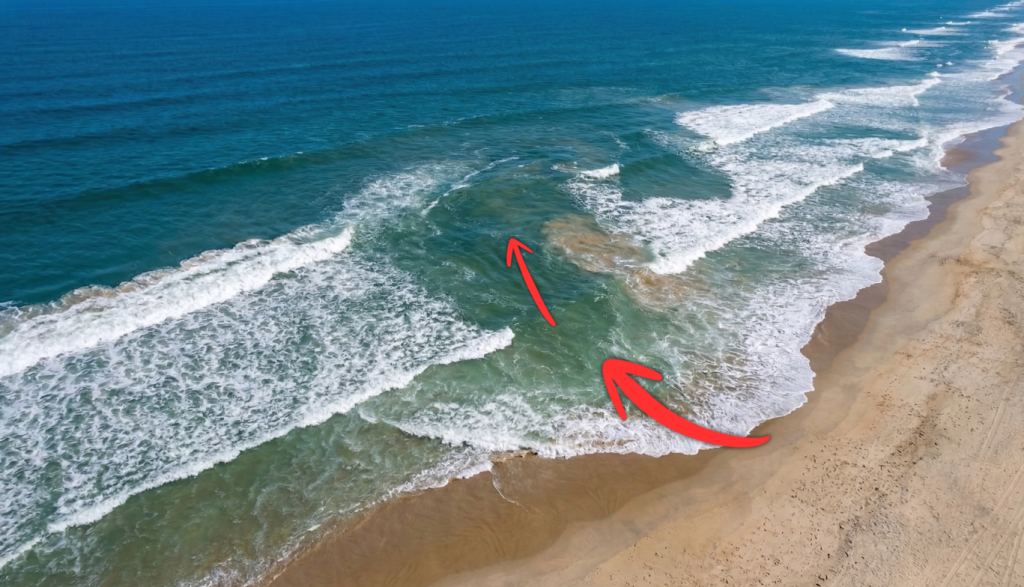
How Ocean Conditions Can Make Rip Currents Harder to Read
A rip current is easier to spot in some conditions than in others. The same beach can look clear and readable one hour, then confused and messy later in the day. Bigger swell and rough waves push more water toward the beach, which means more water has to move back out. That can make rip currents stronger. It can also make them harder to read because the whole surf zone looks more broken, foamy, and unsettled.
Tide changes the shape of the beach and the way waves break across sandbars. If you want a broader overview of how surf conditions change through the year, this guide can help. A spot that seems easy to read at one stage of the tide may look very different a few hours later. Channels can become clearer or harder to see, so it is worth checking the water again instead of assuming the beach is unchanged.
For a more detailed explanation of how rip currents form and behave, see the National Weather Service guide to rip current science.
How to Tell If You’re in a Rip Current and What to Do Next
Sometimes you do not realize you are in a rip current right away. The first sign is often simple: you are trying to get back in, but the beach is not getting any closer. You may also notice that you are drifting away from the area where you entered the water.
Signs you’re already in trouble
If you are being pulled farther from shore without choosing to go out, pay attention. If swimming straight in feels unusually hard, that is another warning sign. A rip current often becomes obvious when effort stops matching results.
Fatigue is another clear signal. If you feel yourself getting tired fast, or starting to panic because you are not making progress, the situation can get worse quickly. The danger often comes from exhaustion and poor decisions, not just from the current itself.
The safest response
If you think you are in a rip current, follow these steps:
- Stay calm
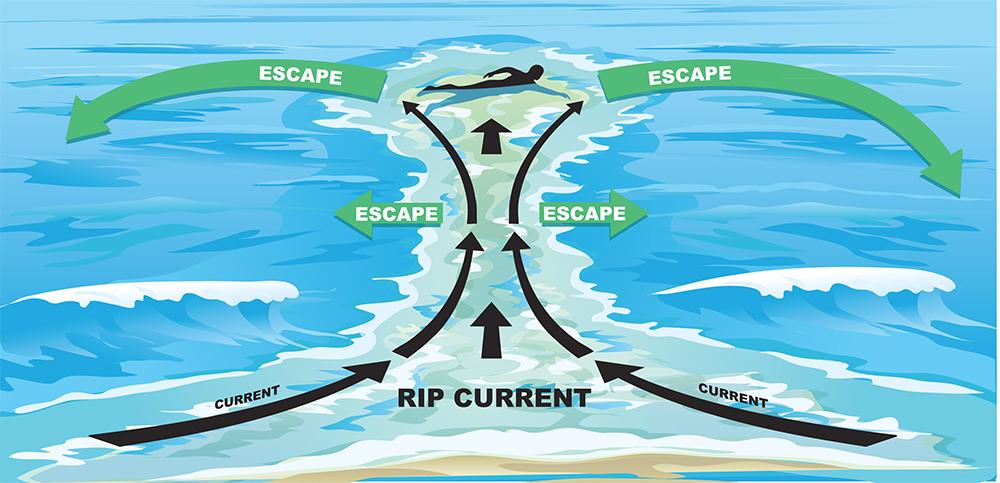
A rip current pulls you away from shore, but it does not pull you under. Panic wastes energy and makes it harder to think clearly. - Do not swim straight back to the beach
Fighting the current head-on usually leads to exhaustion. In most cases, the current is stronger than it looks. - Swim parallel to the shore
Move to the side rather than trying to force your way directly in. The goal is to get out of the narrow channel of water moving offshore. - Angle back in once the pull weakens
When you no longer feel the current dragging you out, swim back toward the beach at an angle. - Float and signal for help if needed
If you are too tired to swim, float or tread water. Raise one arm and call for help. Saving energy is safer than forcing a bad swim.
Simple Beach Habits That Lower the Risk
A few simple habits before you enter the water can reduce the chance of making a bad decision.
- Watch the water before you go in: take a few minutes to see where waves are breaking, where the surface looks different, and whether foam or debris is moving away from shore.
- Do not swim when tired, overheated, or after drinking: fatigue, heat, dehydration, and alcohol all reduce judgment and slow your reaction if conditions change.
- Ask a lifeguard or local beach staff when in doubt: someone who knows the beach can often tell you quickly whether a section of water should be avoided.
If you are checking conditions before a session, a live surf report can also help you read the beach more carefully.
Conclusion : What Looks Safe Can Be Misleading
Before you enter the water, take one more look. A rip current often appears in the place that seems easier, calmer, or more open.
| What looks safer | What actually deserves caution |
| A calm patch between breaking waves | It may be a rip channel moving water back offshore |
| Water that looks darker or a different color | It may show deeper water, moving sand, or a current |
| Foam or seaweed drifting steadily outward | It may reveal water flowing away from shore |
If something looks different from the water around it, do not ignore it. At the beach, unusual water movement is often the sign that matters most.